Category Archives: General History

What Price for Care?

In the 1800s Families Could Be as Medically Informed as Most Doctors

In the 1800s Families Could Be as Medically Informed as Most Doctors

The public originally supported insane asylums because they offered genuine hope. Typical at-home care provided little focused psychological expertise for patients, so recoveries within this family system had been few and far between. (One exception might be for conditions  like “melancholia” that could perhaps be treated by a change of scenery.) However, when professionally staffed asylums gave patients the time and attention they needed, recoveries did occur, and the former life-sentence of insanity seemed to have lifted.
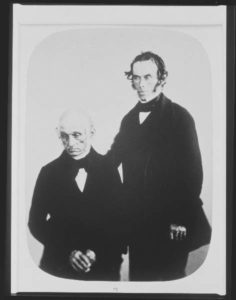
John and Thomas Bailey, Father and Son Admitted Simultaneously to an Asylum for Melancholia, courtesy Museum of the Mind

John and Thomas Bailey, Father and Son Admitted Simultaneously to an Asylum for Melancholia, courtesy Museum of the Mind

Asylums were imposing, beautifully constructed, and reassuring. Superintendents who had actually been trained in the treatment of insanity–unlike family doctors who may have read a book or two on the topic–added to that reassurance. Families lost their reluctance to send loved ones to asylums and many times were rewarded for their faith. Even those who knew a family member would never recover could at least have the physical and psychological burdens of care lifted from their own shoulders.

Bloomingdale Asylum Presented a Lovely and Imposing Picture

Bloomingdale Asylum Presented a Lovely and Imposing Picture

That first wave of care paved the way for successive waves of continually poorer care as more and more families took advantage of asylums and stretched their resources too thin. At that point, money made all the difference. My next post(s) will discuss some of the differences money made in the quality of care for the insane.
Escape Was Possible

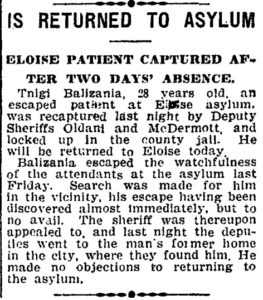
Newspapers Often Alerted the Public to Escapes

Newspapers Often Alerted the Public to Escapes

Many patients who were involuntarily committed to asylums were understandably anxious to leave. Though most did not have the wealth and eventual aid that patients like Chanler did (see last post), many still managed to escape. These patient escapes were usually termed “elopements” by the psychiatric community, perhaps because the word “escape” sounded very much like patients were prisoners.

August H. Bloom came to the Hastings Asylum in Minnesota on September 2, 1905 and escaped two days later. The asylum’s superintendent described this patient’s escape and the actions he took subsequent to it, which were probably common to most other institutions. “Whenever a patient elopes, we advise the operator at the depot, who notifies the agent on either side of Hastings; we also send out from two to three attendants looking for them.”

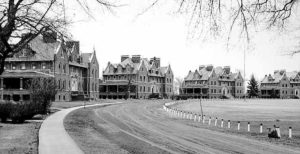
Hastings State Hospital, courtesy Minnesota Historical Society Library

Hastings State Hospital, courtesy Minnesota Historical Society Library

The superintendent would then advise any family members of the escape, and ask to be notified if the patient made his way to relatives. If the patient did manage to return home and the family wanted him/her to remain, the superintendent bowed to their wishes. Otherwise, if the superintendent got word that a patient had been captured away from home, he sent an attendant to get the person. If someone elsewhere brought the patient back to the asylum, the superintendent paid the person’s expenses.

Birds Eye View, Red Wing, 1907, courtesy LakesnWoods.com Postcard and Postcard Image Collection

Birds Eye View, Red Wing, 1907, courtesy LakesnWoods.com Postcard and Postcard Image Collection

August Bloom apparently bounced around a bit and then settled in Minneapolis. In the summer of 1906 Bloom traveled a short distance away to Red Wing, where he killed the Chief of Police and one of his officers. Even though Bloom had been known to be an escaped asylum patient, no one suspected him of being capable of violence until this incident occurred.

Was There Any Way Out?

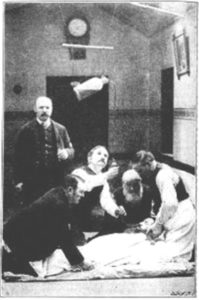
Force Feeding a Patient at the Willard, Asylum for the Insane, llate 1800s, courtesy The Inmates of Willard

Force Feeding a Patient at the Willard Asylum for the Insane, late 1800s, courtesy The Inmates of Willard

Horror stories abound about the cruelty and sadness of life in an asylum. Especially as asylums became overcrowded and less well-run, it was hard for patients to recover from whatever condition had sent them there. Even worse, the patients’ relatives often had no desire or incentive to bring them home–whether they did get better or not. Sometimes, patients simply had no relatives or friends to return to.

Physicians at asylums had more incentive to discharge patients so that their “cure rates” could go up, but if they had nowhere to send an “improved” or “cured” patient, they might feel they had no choice but to keep them in the asylum. Additionally, many physicians were too busy–or didn’t care enough–to spend much time with patients and couldn’t determine whether or not they had improved. All these factors could lead to a lifetime of treatment for what had been a temporary problem.

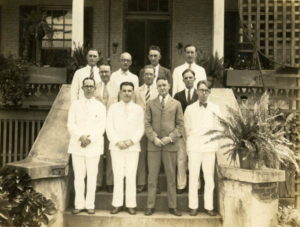
Doctors and Administrators at the Florida State Hospital, circa 1920s, courtesy State Archives of Florida

Doctors and Administrators at the Florida State Hospital, circa 1920s, courtesy State Archives of Florida

An 1880 report from the Insane Asylum of California summed up the facility’s overall cure rate (since its creation) as just under 47%. This was certainly an admirable rate, but the superintendent also pointed out that very sadly, some patients were being sent to the asylum who more properly belonged to a state hospital or infirmary. He was speaking specifically about patients who were senile or had chronic diseases, but he also mentioned a state law against sending “cases of “idiocy or imbecility, or simple feebleness of mind” to asylums. The law was obviously being ignored.

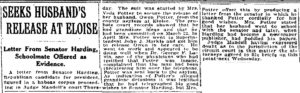
An Advocate Went a Long Way Toward a Patient's Release, courtesy Portraits of Eloise blog

An Advocate Went a Long Way Toward a Patient’s Release, courtesy Portraits of Eloise blog

Some patients did manage to get out of asylums even though the odds were stacked against them, and I will discuss these cases in an upcoming post(s).

The Insane in Territories

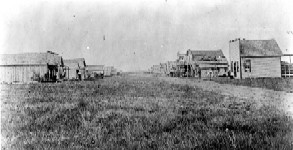
Main Street in Norman, OK, 1889, courtesy Emma Coleman Photography Collection, University of Oklahoma

Main Street in Norman, OK, 1889, courtesy Emma Coleman Photography Collection, University of Oklahoma

Several states had created insane asylums while they were still part of a Territory; Oklahoma was one of these. The Cherokee Nation actually established the first asylum in the area when they erected the Cherokee Home for the Insane, Deaf, Dumb, and Blind outside the city of Tahlequah in 1873.

The Territory’s non-native insane were sent to Jacksonville, Illinois for treatment until two physicians created a private company called the Oklahoma Sanitarium Company. The Territorial Legislation awarded them a three-year contract to care for the insane, hoping to cut down on transportation costs for patients going to Illinois. The company constructed a hospital (the Oklahoma State Hospital) at Norman, OK in 1895. The Territory also approved a second asylum (Oklahoma Hospital for the Insane) in Supply, OK in 1905.

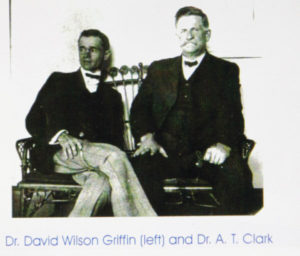
Dr. Griffin Was Hired from North Carolina in 1899

Dr. Griffin Was Hired from North Carolina in 1899 and Became Superintendent in 1902

Because Oklahoma’s institutions were created later on in the asylum era (a third one opened in 1913), care was relatively modern: the State Hospital’s staff consisted of both attendants and nurses, as well as a physician-superintendent and assistant physicians. By 1910, it had even adopted the practice of employing women nurses in male wards. Within twenty years of its creation, the hospital had a training school for nurses and a laboratory.

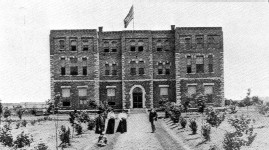
Oklahoma Sanitarium Building, 1897, courtesy Emma Coleman Photography Collection, Oklahoma University

Oklahoma Sanitarium Building, 1897, courtesy Emma Coleman Photography Collection, Oklahoma University

A 1909 report from the institution shows that 94 patients were either released or “restored” and 48 released as “improved.” A number of other patients (71) were paroled, that is, given the opportunity to go home to see how they would do, while 15 managed to escape.

For those in the asylum at the time, a majority diagnosis was hereditary insanity. Other causes for insanity included: ill health; syphilis; inebriates; old age; drugs; child birth; mental worry; privation; injury to brain; epilepsy; sunstroke; pellagra; and self abuse.

Schools for Insanity

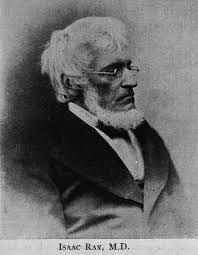
Alienist Dr. Isaac Ray

Alienist Dr. Isaac Ray

People today wonder how physicians and other educated people could have believed excessive smoking, masturbation, or reading novels might lead to insanity. Though anything in excess is probably not as healthy for a person as that same thing in moderation, how could something like “excessive study” cause insanity? An extremely prominent alienist, Dr. Isaac Ray, explained:

“Though hard study at school is rarely the immediate cause of insanity, it is the most frequent of its ulterior causes, except hereditary tendencies.” Ray further declared that the chances of recovery [from insanity] were far fewer in the “studious, intellectual child” than in the opposite type. The reason for this, Ray explained, was that “though the immediate mischief may have seemed slight, but the brain is left in a condition of peculiar impressibility, which renders it morbidly sensitive to every adverse influence.”

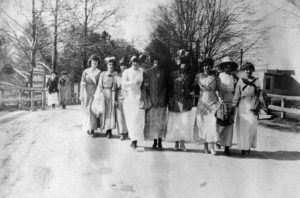
irls From Glen Eden Boarding School for Girls, circa 1911

Students From Glen Eden Boarding School for Girls, circa 1911

Ray’s remarks appeared in a September, 1859 issue of the The Atlantic Monthly, within an article strongly admonishing the then-present system of excessive schoolwork for children. A typical schedule in a well-run girls’ boarding school could be something like this: Rise at 5:00 a.m., study for two hours, eat breakfast, spend six more hours in the schoolroom, eat lunch, then spend two hours sewing, writing letters, completing other small tasks, and perhaps walking if weather permitted. Afterward there would be another hour of study, supper, and then two more hours of study–eleven in all. The author later mentioned popular Sunday School contests throughout the country, in which winners memorized up to 5,000 Bible verses.

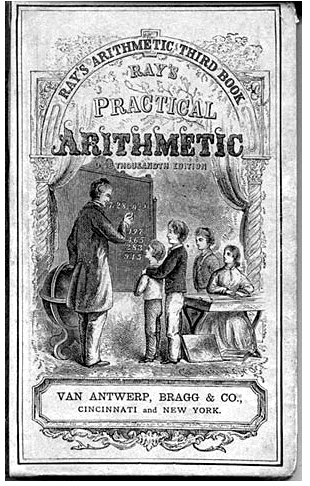
An 1854 Math Book by Joseph Ray

An 1854 Math Book by Joseph Ray

It’s no wonder that many children fell into ill health, whether or not the excessive study actually led to insanity. However, with this kind of tasking in mind, it’s a bit easier to believe the (unnamed) author’s statement that he had recently heard of “a child’s dying insane, from sheer overwork, and raving of algebra.”


When Johnny Came Marching Home

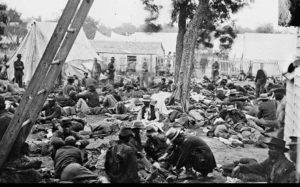
Soldiers Could Never Escape the Suffering Imposed by the Civil War, courtesy Library of Congress

Soldiers Could Never Escape the Suffering Imposed by the Civil War, courtesy Library of Congress

People today understand the after-effects of war on veterans better than previous generations did (though that doesn’t diminish its trauma). Soldiers in previous eras were much more on their own, since medical personnel didn’t recognize the emotional damage and scarring they often suffered. Civil War soldiers in particular faced a changed war environment that greatly contributed to their later trauma.

These young men suffered death and injury on the grandest scale experienced in American history. They endured horrific wounds inflicted by new weapons and then went on to suffer just as intently afterward from assembly-line-style amputations. Many soldiers saw the ground seem to crawl and shift with wounded, struggling bodies after a great battle, or heard cries for help they could never forget. They often carried this trauma back to the battlefield and then home.

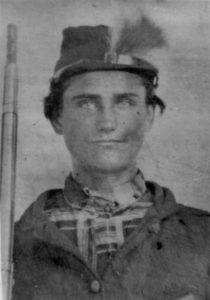
ivil War Soldier Angelo Crapsey, 1861, Who Committed Suicide in 1864 After a Period of Mental Illness, courtesy Kutztown University of Pennsylvania

Civil War Soldier Angelo Crapsey, 1861, Who Committed Suicide in 1864 After a Period of Mental Illness, courtesy Kutztown University of Pennsylvania

Physicians did recognize that some symptoms occurred specifically to soldiers they saw: heart palpitations, sweating, and/or rapid breathing, and other symptoms of panic attacks. These manifestations were identified by Jacob Mendes Da Costa and called “Da Costa’s Syndrome” or more commonly, “soldier’s heart” or “irritable heart.” Some physicians sympathized with men suffering from it, while others thought they were merely shirking their duty. At home, men who suffered from the after-effects of war trauma were similarly misunderstood.

The Government Hospital for the Insane (later known as St. Elizabeths) had been built specifically for soldiers, sailors, and the indigent of Washington, DC, but many other asylums also saw an influx of veterans who could not cope with their post-war trauma. Most did not get much help beyond the security of three meals a day and a bed to sleep in, along with occupational therapy–usually in the form of work–to help them pass their days.

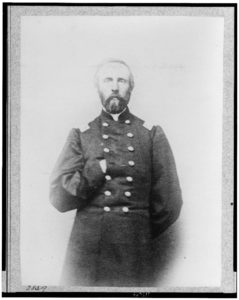
Brevet Brigadier General Newell Gleason Was Committed to the Indiana State Hospital for the Insane in 1874 andCommitted Suicide in 1886 Some Time After His Release, courtesy Library of Congress

Brevet Brigadier General Newell Gleason Was Admitted to the Indiana State Hospital for the Insane in 1874 and Committed Suicide in 1886 Some Time After His Release, courtesy Library of Congress

These veterans were often traumatized one last time by family members and a society ashamed by the idea of mental illness and the “weakness” of the man suffering from it.

Confusion About Insanity

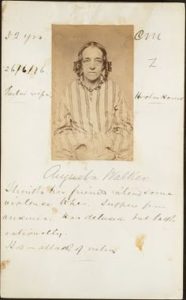
This Delusional Woman Believed Her Friends Wanted to Hurt Her

This Delusional Woman Believed Her Friends Wanted to Hurt Her

Though many alienists (a term for early psychiatrists) felt perfectly competent to treat insanity, few felt that they could actually define it. In his book, A Treatise on Insanity in its Medical Relations (1883), Dr. William Hammond demonstrated the difficult of defining insanity by citing various experts:

“According to Hoffbauer, an individual is insane when the understanding is diverted . . . when he is powerless to avail himself of  his intellectual facilities, or to make known his wishes in a suitable manner.” However, Hammond pointed out, this definition would include conditions like “apoplexy and concussion and compression of the brain.”

“The late Professor Gilman . . . declared that ‘insanity is a disease of the brain by which the freedom of the will is impaired.'” As with the previous definition, however, Hammond declared that “this definition neither covers the subject nor excludes other diseases.”

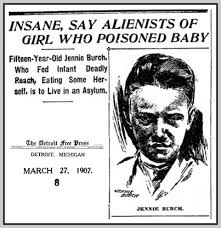
Insanity Could Lead to Unthinkable Crimes

Insanity Could Lead to Unthinkable Crimes

Several alienists Hammond quoted declined to define insanity at all, saying that no definition in any kind of general terms would be useful. Even common manifestations of insanity such as illusions, hallucinations, and delusions could not definitively diagnose it, since there were reasons why these conditions might occur whether a person was insane or not.

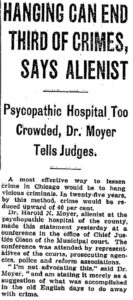
Alienists Did Not Necessarily Believe Insanity Caused All or Most Crime

Alienists Did Not Necessarily Believe Insanity Caused All or Most Crime (January 19, 1919 Issue of the Chicago Tribune)

One of the issues surrounding the diagnosis of insanity through the ages is that the condition can’t really be defined the way a case of measles or a broken leg can be. Culture, custom, expectations, and so on constantly refine what is acceptable behavior or what will be tolerated through the ages and across cultures.

That leaves the question: What is insanity?


Predicting Madness

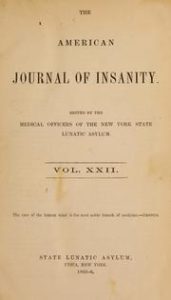
Issue of the American Journal of Insanity

Issue of the American Journal of Insanity

“I am tempted sometimes to think that no person goes mad . . . who does not show more or less plainly, by his gait, manner, gestures, habits of thought, feeling and action that he is predestined to go mad.”

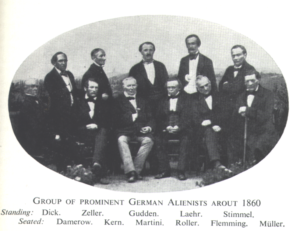
This quote (by a Professor Maudsley) in the October,1872 issue of the American Journal of Insanity, shows clearly that many noted psychiatrists–called alienists at the time–believed they could predict who might eventually go insane. Unfortunately, alienists had little ability to prevent this madness, beyond advising potential patients to avoid certain triggers that might bring it on. Such triggers included overwork, over-excitement, riotous living, worry, financial setbacks, grief, and so on.

Group of Prominent German Alienists

Group of Prominent German Alienists

Even more unfortunately, many alienists believed that insanity was rooted in physical causes that could be hereditary. This view had the potential to put anyone who had mental illness within the family in limbo, waiting to see if the illness would manifest. And because it was so often considered hereditary, having a family member with insanity was a barrier to marriage unless its cause could be positively attributed to an unusual circumstance like a blow to the head, sunstroke, or other purely physical cause.

This Eugenics Certificate Shows the Public's Fear of Undesirable Hereditary Traits, courtesy Robert Bogdan Collection

This Eugenics Certificate Shows the Public’s Fear of Undesirable Hereditary Traits, courtesy Robert Bogdan Collection

It is certainly sad to think that many people waited and worried their entire lives over an issue that had no potential to materialize.

Happier at Home

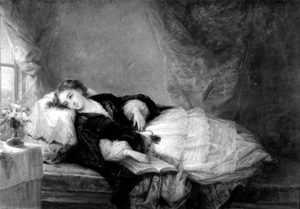
The Invalid, circa 1870, by Louis Lang is Highly Idealized

The Invalid, circa 1870, by Louis Lang is Highly Idealized

Most people today don’t enjoy staying in hospitals, and this was doubly true for people in the 1800s. Doctors were not held in high esteem, and neither medical knowledge nor the primitive equipment/technology available were particularly reassuring. Well into the early 1900s, many ordinary people considered hospitals more a place to die than a place to recover.

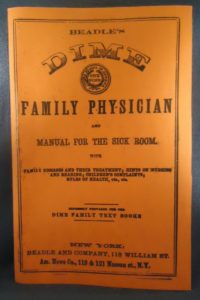
Instead, home care was the norm, and hospitals were often seen as a last resort for patients without family and friends to care for them. (This is a general statement, of course, and certainly people did go to hospitals with excellent outcomes.) Rather than relying on professional staff, most families expected mothers, sisters, and wives to “nurse” anyone in the family who was ill. Between a doctor’s visit, a few herbs and traditional concoctions, and a consultation with a home medical manual, most families coped well enough with the situations that came their way.

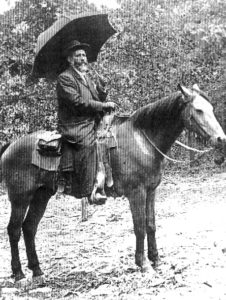
Dr. Thomas Riddle in the 1920s

Dr. Thomas Riddle in the 1920s

Mental health care was different. No one–including doctors–really understood it or knew how to treat it. Consequently, the mentally ill were often neglected. Some families were ashamed of their sick relative and hid him or her away in the traditional attic described in many a melodramatic tale. Other families beat or starved their insane members out of ignorance or exasperation, or turned them out entirely if their behavior became too difficult to handle. Actually treating mental illness with a hope for recovery was nearly impossible in the home.

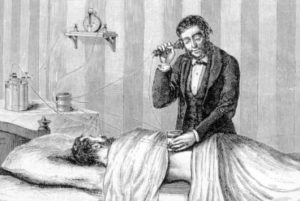
A Doctor Checking on a Patient, 1800s

A Doctor Checking on a Patient, 1800s

As medical knowledge increased, the idea of “hospitals for the insane” became more acceptable. This blog and the book I’m working on will give information about the early years of psychiatry and its most visible symbol: the insane asylum.